

Hello, everyone! Welcome to the hub for my Deep Dive project Establishing Screamo Canon: From Chaos to Catharsis! 2025 was the Year of Screamo and, while I didn’t quite get to my goal of covering Screamo from the 90s through 2015, getting through the 90s wound up being a Herculean feat in and of itself. I’m quite proud of this accomplishment! The series will continue indefinitely as I have time for it, but getting it up onto the website was very important. Please refer to the Overview post for more information about the series and the various sub-series within.
Below you can sort by subseries or via a tag cloud, weighing the most commonly-used tags such as artists, release years, record labels, locations, genres and even descriptors! Please keep an eye on this as the series continues! Alternatively, you may use the below search function to find anything you might be interested in reading about within the series. Please note that when you click one of the following links, you will have to scroll past the welcome and navigation sections to access the content.

- Emoviolence
- Dynamic
- Dissonant
- Chaotic
- Frantic
- Melodic
- 1999
- Post-Hardcore
- Raw
- 1997
- Hardcore Punk
- 1998
- Noisy
- 1996
- Emocore
- Florida
- SoCal
- Lofi
- Noise Rock
- Atmospheric
- Metalcore
- Post-Rock
- Midwest Emo
- Energetic
- Grindcore
- Canada
- Complex
- Massachusetts
- Reversal of Man
- Independent
- NorCal
- 1994
- Ebullition Records
- Orchid
- Manic
- France
- New York
- New Jersey
- Aggressive
- Gravity Records
- Sass
- Mountain Records
- Pennsylvania
- Dark
- Combatwoundedveteran
- Intense
- Witching Hour Records
- The Great American Steak Religion
- Dense
- Cold
- Metallic
- Technical
- Virginia
- Eclectic
- South Carolina
- 1993
- 1992
- Saetia
- Playful
- Three One G Records
- Frenetic
- Math Rock
- Powerviolence
- Indiana
- Driving
- You and I
- Puritan
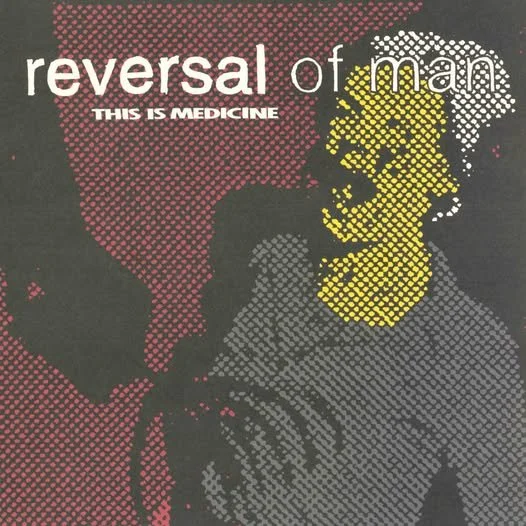
Reversal of Man - This Is Medicine | Screamo Hall of Fame Class of 1999 Nominee
Release Information:
8/9/1999
Ebullition Records
Tampa. FL (Southeast)
Runtime: 18:41
Tracks: 16
Band Members:
Matt Coplon (Vocals)
Dan Radde (Guitar, Vocals)
Jason Crittenden (Guitar)
Jeff Howe (Bass, Vocals)
John Wiley (Drums)
At a Glance:
Emoviolence, Raw, Dark, Dissonant, Frenetic
Musical Analysis:
This record encapsulates suffering unlike anything before it, utilizing dynamic aggression, dissonant guitar and boisterous drumming. Most songs have only two gears: quieter, intense and dissonant sections that build the music up, and the most frantic and dissonant bursts of anger and chaos. Wrapping this gnarly package up are sinister screamed vocals, headed by Matt Coplon.
The entire listen breezes through in large part due to this album's impeccable sense of flow and kineticism; each track emanates with danger in equal measure to the energy put in, and, combined with the songs seamlessly bridging together, gives a small measure of accessibility to an otherwise unholy package.
Historical Analysis:
This release solidified Reversal of Man as one of the great Emoviolence artists of the 90s. Its influence on the local scene and beyond, and the extraordinarily high musical standards they set, are still revered to this day.
This EP also demonstrates a different aspect of the genre than fellow Tampanians Combatwoundedveteran, eschewing Grindcore in favor of dissonance and dynamism. While you can argue which is the better album, This Is Medicine seems to have slid more into obscurity, possibly a cult classic or hidden gem. By my own admittedly arbitrary standards, I have to leave this one out of the Hall and it makes me sad.
Lyrical Analysis:
Matt Coplon’s brevity and directness are at the core of his lyricism, aiming at political and social injustices with decided rage and worldly allusions and references. The primary antagonist of this album is the corrosive power of fascism and capitalism. We see how, in the calculus of power, human life is disposable, war is theft, justice is selective, morality justifies violence, and technology tightens like a noose around society’s neck. Personal issues like guilt over failing relationships and the grief of untimely death rear their ugly heads in this mess as well, while other systems and communities are thrown strays: the news is indoctrination, not information; the Punk scene has fallen to branding over rebellion; the absence of personal connection powers the deadly machine of consumerism. These are not the most original lyrical topics in this scene, but they’re executed succinctly and in line with the amazing instrumentals.
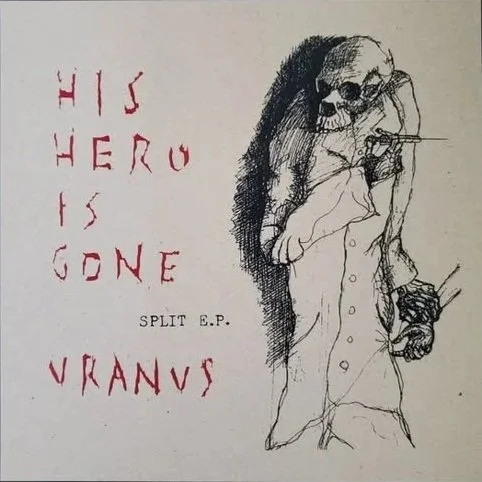
His Hero Is Gone / Uranus - Split E.P. | Connective Tissue 1997
His Hero Is Gone
(Memphis, TN)
Todd Burdette (Guitar, Vocals)
Pat Davis (Guitar)
Carl Auge (Bass, Vocals)
Paul Burdette (Drums)
Uranus
(Ottawa, Ontario, Canada)
Geoff Cousens (Vocals)
Yannick Lorraine (Guitar)
Karl (Guitar)
Matt Bruce (Drums)
Basic Info:
Release Date: 1997
Label: The Great American Steak Religion
Runtime: 23:59-His Hero Is Gone: 9:05
-Uranus: 14:54
Tracks: 11
-His Hero Is Gone: 6
-Uranus: 5
Genres, Influences and Characteristics:
Crust Punk, Screamo, Dark, Aggressive, Dissonant
Points on the Timeline:
After a couple of years as a band producing a demo and an EP, 1997 was a breakout year for Crust Punk legends His Hero Is Gone. Not only did they come out with this split, they released their two landmark LPs in the same year. This would be their hottest year as they’d be broken up before the end of the century. Their contributions on this split would be released under a solo EP called Fool’s Gold a year later. Meanwhile, Uranus was still establishing themselves by ‘97, having only released a demo and a split a few years prior. This would be their last release before their seminal Disaster by Design EP would come out in a year’s time.
Shapes in the Sound:
Although His Hero Is Gone is not a Screamo band by any means, they did release this split with Crust-influenced Screamo band Uranus. The band exemplifies the tropes of the genre to a tee with metallic, down-tuned guitar riffs, pounding D-Beat style drums and a gnarly, gutteral screaming voice. Songs rarely last over one minute and keep a high intensity throughout. Uranus takes many of Crust Punk’s elements, exhibited beautifully by their splitmates, and applies longer song forms, higher-register screaming and more melody.
Threads in the Tapestry:
Although neither side of the split would be considered the bands’ best works, it showcases what Crust Punk is all about and how naturally it can fit into the Screamo formula. These two were on the same side of the continent, but almost 2,000 miles apart. It seems like the spirit of this underappreciated Punk subgenre could not be contained by mere borders.
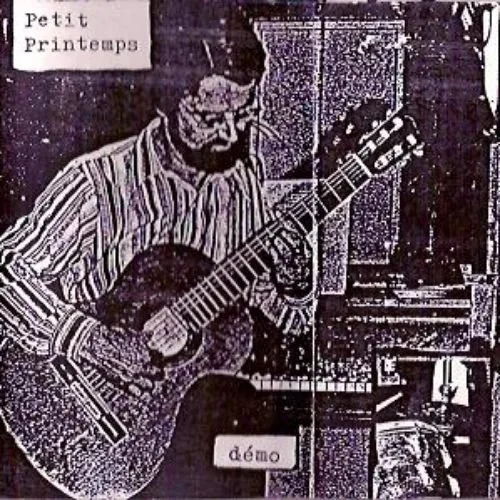
Petit Printemps - Démo | Screamo Hall of Fame Class of 1997 Nominee
Release Information:
1997
Moe’s Records
Poitiers, Nouvelle-Aquitaine, France
Runtime: 20:21
Tracks: 7
Band Members:
Vincent Coste (Vocals)
Mikaël Thévenot (Guitar)
Greg Pyvka (Bass)
Baptiste Brousseau (Drums)
Genres, Influences and Characteristics:
Screamo, Lofi, Raw, Melodic, Dark, Cold
Musical Analysis:
Ordinarily, when I describe early Screamo as Lofi, I mean Screamo recorded and produced at basement or completely DIY level, but otherwise sounds like your typical Screamo fare. This is usually out of necessity to reduce costs, and it might be in this case as well, but bands didn't actually utilize these limitations as conscious songwriting tools until Petit Printemps. The band uses lots of twinkles, subdued drumming and spoken word to establish a soft baseline from which to dial up the intensity. Because of this, these dynamics are highlighted by the hazy production rather than snuffed out.
Historical Analysis:
Although this record wouldn't go on to define Lofi Screamo or directly influence that scene, but it is very impressive to have executed the idea more than two decades before it would become a common practice. Breaking this demo down reveals how connected they were to the French Screamo sound of this time - raw, melodic and dynamic. However, in the tapestry of Screamo Canon, this is more of a rarity than a true legend.
Lyrical Analysis:
*Note that because this is an old, DIY and relatively minor release in the grand scheme of Emo and Screamo history, I cannot locate lyrics for any of these songs. If more lyrics can be dug out, I will reevaluate the lyrical analysis. Please note any lyrical analysis on my end will lack cultural nuance and accuracy in the translation.*
One Eyed God Prophecy - One Eyed God Prophecy | The Shape of Screamo to Come
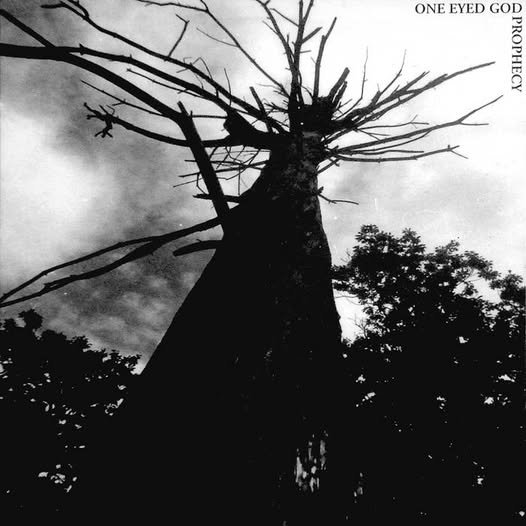
Release Information:
1995
The Great American Steak Religion Records
Sherbrooke, QC, Canada
Runtime: 33:00
Tracks: 7
Band Members:
Dom Poulin (Vocals)
Seb Philbert (Guitar)
Ugo Desgreniers (Guitar)
Alex Bibeau (Bass)
J-P Dionne (Drums)
Genres, Influences and Characteristics:
Screamo, Sludge Metal, Noise Rock, Dark, Atmospheric, Dense, Crusty
Musical Analysis:
This album sounds EVIL. There’s a sinister air to the songs on this record, exhibited perfectly by the intimidating intro song. However, judging this album based on the heavy, dark first track would belie the dynamism and atmosphere that the album takes time to establish. The fuzzy guitar tones make them sound insurmountable during moments of musical mayhem, though the clean twinkly sections that plague this release are as serene as they come. The drums are consistent and are played exactly as they’re needed in the moment, whether that’s burning the house down with Emoviolence-esque chaos or building atmosphere with spaced-out cymbals. The harrowing vocal performance is definitely high-register, though it is fairly low in the mix.
Historical Analysis:
Despite only being a cult favorite in Screamo, the influence this release has had cannot be understated. Few Screamo albums before this emphasized cultivating an atmospheric sound rather than aiming strictly for brutality and heaviness. Additionally, OEGP sneaked high-class musicianship into the equation, adding to the chaos and technicality that would soon become commonplace. Although Sludge and Crust influences in Screamo were never omnipotent, enough artists from the 90s til now owe their livelihood to what this album accomplished.
Lyrical Analysis:
Despite the obscurity of the screamed lyrics, the emotional veracity and intensity is never lost by the vocal performance or the words themselves. One Eyed God Prophecy blends social critique, existential dread and emotional vulnerability into an explosive cocktail of poetry and prose. The singer desperately searches for authenticity in a world of greed and falsehoods, though he invokes personal responsibility to solve the problem. He criticizes Capitalism for destroying the ecosystem, but also for destroying local communities and alienating us. He even speaks about the desperate dance of hope and despair, romantic longing and generational tension, just to name a few of the many thematic subjects brought forth. This varied commentary on the human condition and the sociopolitical climate behind it would become a staple of Screamo in the 90s into the early 00s.